

Why Your Solar System Is Not Producing Enough Power
Solar System Not Producing Enough Power | Common Causes & Fixes
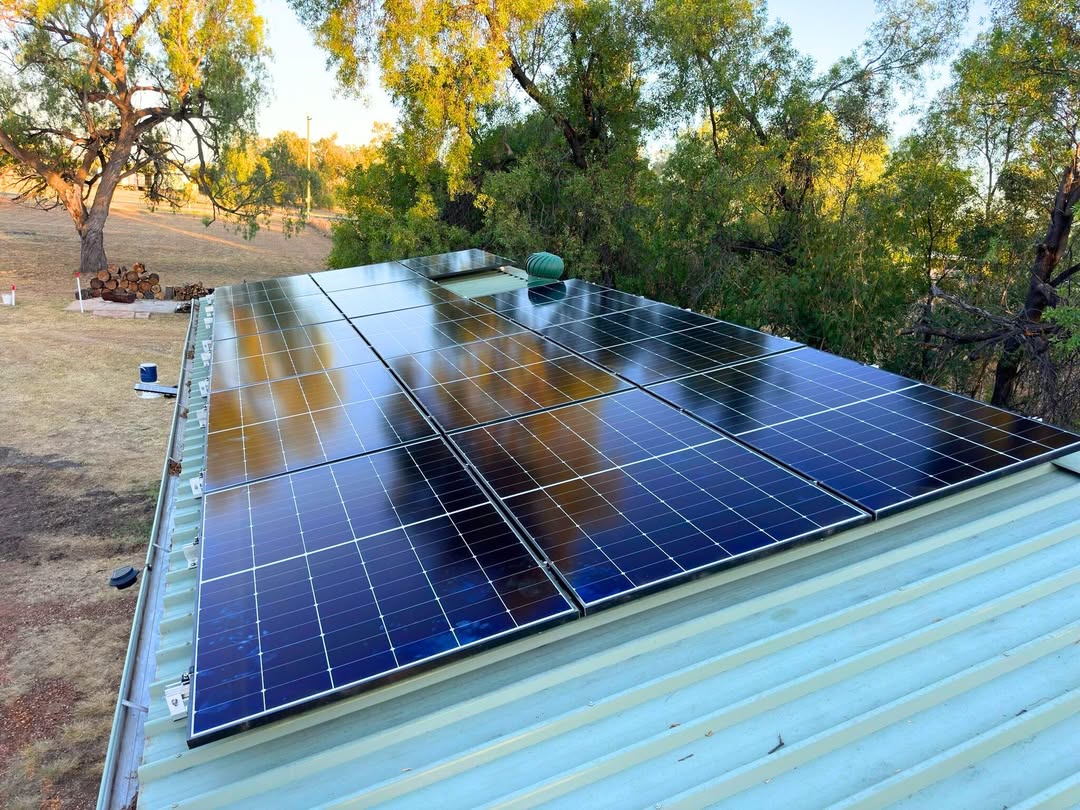
You know that feeling. You open the power bill and just stare at it. You've got a roof full of solar panels. The sun's been blazing down like it owes you money. And yet, that bill is still way higher than you thought it would be. You start wondering if the panels are just for show. Like maybe they're just fancy roof decorations at this point.
If you're in NSW or Queensland, you're not alone. I hear this all the time. Especially from folks who got their system put in a few years back. It was cranking out power like a champ when it was new. Now? It feels like it's taking a nap half the time.
Look, the good news is that your system probably isn't dead. It's just being lazy. Or it's got a problem you can actually fix. Most of the time, it's not a giant expensive disaster. It's just one of a few common things that happen to solar setups around here, especially with our crazy Aussie weather.
So, before you throw the bill across the room or call the first sparky you find on Google and beg them to save you, let's have a yarn about what's really happening up there on your roof.
Here's what we're gonna chew over:
The Winter Slump: Why it's totally normal for your system to be a bit sleepy in July.
The Sneaky Shade: How that one tree branch is costing you real dollars.
The Grime Factor: Why a layer of dust and bird poop is like sunscreen for your panels.
The Brain Box: What's up when the inverter's lights start flashing weird colours.
The Old Age Thing: Why a 10-year-old system is like a tired old work ute.
The Traffic Jam: Why the grid itself might be telling your system to slow down.
The Nasty Surprises: A quick look at chewed wires and loose connections.
The Winter Slump: Yeah, It's Meant to Do That
We will begin with the easy one. The one people seem to panic when they see it. In June or July, you go to your monitoring app and the small graph is pathetic, compared to what it was in January.
Don't stress. That's just winter.
I know, I know. You gaze up and reason, But the sun still shines! It is, but it's not the same. The sun is lower in the sky. The days are way shorter. The light is just weaker.
Here's the rough truth for us in NSW and Queensland. In the middle of winter, a system in Sydney will only produce about 64% of what it does on average over the year. Where we are in Brisbane it is a little better, as we are further north, and only get down to about 73 per cent of average.
That means a sunny winter's day in Brisbane is never going to beat a sunny summer's day. That is the way the sun is. When your system has gone dead by about a quarter or a third in July, it is not likely to be broken. It's just winter. The most you can do is to turn on your large power consumption (such as the washing machine or dishwasher) somewhere in the middle of the day, between 11 and 2, when the panels are pulling their hardest.
The Sneaky Shade: A Little Shadow Puts in a Bad Day.
It is the one that makes me nuts. People reason, It must be a little bit of shade on one of the panels by the new gum-tree of the neighbour. That cannot make much difference.
It matters. It matters a lot.
If you've got an older "string inverter" setup, your panels are all linked together like a set of old Christmas lights. One goes out, they all dim. And therefore when but one panel is shaded by a tree branch, or by a chimney, it may pull the entire system down to its level. The shade of one panel can cost you hundreds of dollars a year in lost power. And the worst part is that it comes out of the blue. Ten years ago on the panels was a tree you planted? It's grown. It's taller now. Its shadow is cast at 3 PM, something it never did.
Quick remedy: When it is sunny, in the middle of the day, and the middle of the afternoon, go outside. Have a good look at your roof. See any shadows? Trim the branch. If you can't trim it (like it's a neighbour's house or a power line), you might need to look at getting little gadgets called "optimisers" or "microinverters" put on. They let each panel work on its own, so one shady panel doesn't ruin the party for everyone else.
The Grime Factor: Your Panels Are Filthy
We live in a dusty, dry country. And if you're near the coast in Queensland or NSW, you've got salt spray too. Then there's the birds. They seem to think a solar panel is a perfectly good toilet.
All that gunk-the dust, the pollen, the bat droppings, the baked-on bird poop-it acts like a layer of sunscreen. It blocks the light from getting to the silicon inside the panel.
How much are you losing? A dirty panel can lose anywhere from 5% to 25% of its power. In really bad cases, with thick bird droppings or after a dust storm, you can lose even more.
The good news is, for most of us with panels on a decent angle, the rain does a pretty good job of washing them. But if you've had a long dry spell, or your panels are pretty flat on the roof, the rain doesn't cut it.
What to do: If you're comfy on a ladder and you can reach them safely with a hose from the ground, give them a gentle spray in the early morning or late afternoon (never in the middle of a hot day-the cold water can crack the hot glass). Otherwise, just call a window cleaner. A lot of them do solar panels now. It costs about $10 to $20 per panel. It's a cheap way to get your power back.
The Brain Box: It's Probably the Inverter
Alright, this is the heart of the system. That box on the wall with the little lights and the screen. If something is going to fail, it's usually this guy.
Your panels are pretty tough. They'll last 25 years or more. But the inverter? It's got all the delicate electronics inside. It's working hard every single day, converting the sun's power into something your house can use. Most of them only last about 10 to 15 years.
If your system is completely dead, or you're getting weird numbers, go have a squiz at the inverter. What colour is the light?
Green: Good. Probably just the winter slump or some shade.
Orange or Flashing: Something's up. It might be throttling back because it's too hot.
Red: Bad news. Something's wrong.
No Light at All: It's off. Check the breaker switch in your main power box. Sometimes it just trips.
Also, if you live out in Western Sydney or Ipswich and your inverter is bolted to a west-facing brick wall that gets absolutely hammered by the afternoon sun, it's probably cooking itself. When inverters get too hot, they "derate," which is a fancy way of saying they just slow down to protect themselves from melting. If you can, throw a little shade sail or a cover over it (just don't block the vents!).
The Old Age Thing: Your 10-Year-Old System is Tired
This is the one a lot of people don't want to hear. If your system was put in around 2016 or so, it's not a spring chicken anymore.
Back then, a typical system was about 3kW or 5kW. That was fine. We didn't have as many gadgets. We didn't have electric cars. Now, in 2026, we're using more power than ever. Your 5kW system from a decade ago is just too small for how you live now.
And on top of being too small, it's also old. Panels naturally lose a bit of power every year. It's called degradation. After 10 years of sitting in our brutal Aussie sun, a system can lose 20% to 30% of its original punch. It might look like it's working, because the green light is still on, but it's a "zombie system." It's just going through the motions, not really saving you much money.
Sometimes, trying to fix a really old, small system is like putting a new engine in a bomb. It's better to just "repower" and get a new setup that actually matches how you live now.
The Traffic Jam: It's the Grid's Fault, Not Yours
This is a weird one, but it happens all the time, especially in suburbs where every second house has solar.
Your inverter needs to push power back out to the grid. To do that, it has to push it at a slightly higher voltage than the street. If the street voltage is already super high because everyone else is also pumping out solar at lunchtime, your inverter hits a safety limit. It says, "Nah, too much traffic," and it shuts down for a bit. It will show a "Grid Overvoltage" error.
It's incredibly frustrating because it happens on the sunniest, best days for solar. You look at the roof and think, "Perfect day for free power!" and your inverter is sitting there doing nothing.
There's not a ton you can do about this one yourself. It's a grid issue. But if it's happening constantly, you can complain to your power company (the network, not the retailer) and they might come out and adjust the transformer on your street.
The Nasty Surprises: Wires and Critters
Finally, let's talk about the stuff you hope never happens. But it does.
Critters: Possums, rats, even scrub turkeys up here in QLD, they love getting under solar panels. It's a nice, warm, dry roof. They chew on the cables. That can cause a short circuit or just kill the power to a whole string of panels.
Water: If you've got a dodgy connector or a cracked seal on the roof, water can get into the wiring. That can cause an "Isolation Fault" or "Earth Fault." If you see this on your inverter, it's serious. It means power is leaking somewhere it shouldn't, like into your roof or gutters.
Loose Wires: Over time, with the wind and the heating and cooling, connections can come loose. A loose connection makes heat. Heat makes fires.
If you ever smell a weird burning plastic smell near your switchboard or inverter, or if the system is making a weird buzzing noise, turn it off at the main switch and call Rural Solar. Don't go poking around yourself.
What's the First Thing You Should Do Today?
If you're worried your system is slacking off, start with the simple stuff.
Check the app. Look at the numbers. Compare them to this time last year. Is it a bit lower in winter? Normal. Is it way lower? Problem.
Look at the inverter. Green light? Good. Red light? Call someone.
Look at the roof. Can you see any big clumps of leaves or bird mess on the panels from the ground?
Check your bill. If your feed-in tariff credits have vanished but your habits haven't changed, something is definitely up.
Most of the time, the fix is something simple and cheap. A clean. A trim of a branch. A reset of the inverter. But if you let it go, a small problem can turn into a big, expensive one.
Don't just let it sit there being lazy. Give it a bit of attention and it'll start pulling its weight again. You paid good money for that thing. It should be saving you a packet, not just sitting up there looking pretty.
Stuff People Always Ask Me About Their Solar
1. Why is my solar producing nothing on a perfectly sunny day?
First thing, check the main breaker in your switchboard. Sometimes it just trips and needs a flip back on. If that's not it, look at the inverter for a red light or an error code. It might have tripped due to a grid overvoltage or an earth fault. If it's an earth fault, don't mess with it-call a pro.
2. My panels are from 2016. Should I just replace them?
Not necessarily the panels, but definitely get the system checked. The inverter is the part that usually dies first. If the inverter is gone, you can just swap that out. But if the whole system is only 3kW or so, you might be better off upgrading the whole lot to a bigger system. You'll save more money in the long run.
3. How do I know if my panels are just dirty or actually broken?
Dirt usually makes the power drop a bit across the whole day. A broken panel or a bad connection will usually cause a sudden, big drop in power, or it might knock out a whole "string" of panels at once. A good solar sparky can use a thermal camera to find "hot spots" on a panel that's failing.
4. Do I need to turn my solar off in a storm?
No, the system is designed to handle storms. It's actually safer to leave it on. If the grid goes down in a storm, your solar inverter is legally required to shut down anyway to protect the linesmen fixing the wires.
5. Can I clean my own panels?
If you can reach them safely from the ground with a hose, sure. Give them a spray. But please, for the love of everything, don't get up on a two-storey roof with a bucket and a sponge unless you really know what you're doing. It's just not worth the hospital trip. Pay a window cleaner the hundred bucks.