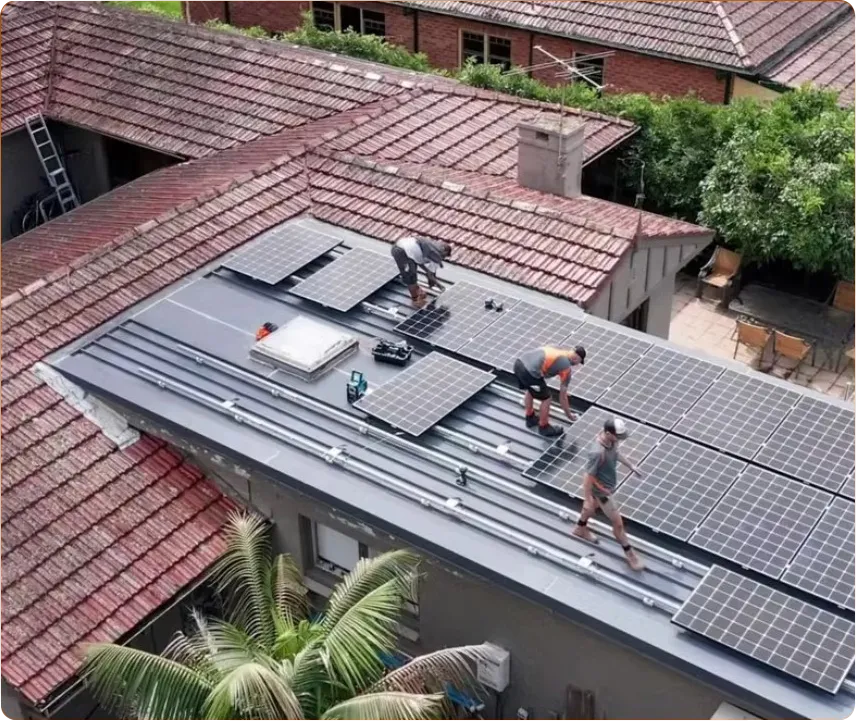
How Aerial Imaging Improves Solar Design Accuracy
G'day. Let's talk about one of the most frustrating parts of getting solar quotes: the guesswork. You know the drill. A bloke comes around, squints at your roof from the driveway, maybe takes a few photos on his phone, and a few days later you get a system design and quote. Ever wonder how accurate that really is? Did he account for that tricky shadow from the big gum tree in the afternoon? Is the proposed layout truly the best one for your weird L-shaped roof?
For years, this was the standard. It led to a lot of "she'll be right" designs, and sometimes, systems that didn't perform nearly as well as the homeowner was promised. It's a big reason some folks feel their solar isn't living up to the hype.
Today, that old-school method is getting a serious upgrade, and it's changing the game for the better. It’s called professional aerial imaging software, and it’s the difference between an educated guess and a precision-engineered plan. Here’s how it improves solar system design, and why it matters for your wallet.
Goodbye, Ladder Guesses. Hello, Satellite & Drone Truth.
Instead of relying on ground-level photos and approximations, reputable installers now use specialised software. They start by pulling high-resolution, 3D satellite imagery of your property. This isn't Google Maps; it's detailed topographic data. Often, they'll back this up with a quick drone flight for an even more precise, up-close view.
This software then builds a incredibly detailed digital twin of your home and its surroundings. We're talking exact roof pitch, precise measurements of every plane, the location of vents and chimneys, and crucially, the position of every tree, fence, and neighbouring building that could cast a shadow.
How This Tech Turns a Guess into a Guarantee
1.Pinpoint Accurate Measurements (No More "About 6.6kW")
Remember the old method of estimating roof space? Gone. The software calculates the exact available area on each roof plane down to the centimetre. This means the system size you're quoted isn't a rough estimate; it's the maximum efficient capacity your roof can physically and legally hold. No more paying for a 10kW system design only to find out on installation day that only 8.5kW of panels actually fit.
2.Sun and Shadow Modelling: Seeing the Future
This is the magic trick. The software doesn't just look at your roof today. It uses the exact latitude and longitude of your house to model the sun’s path for every single day of the year. It can simulate exactly where shadows will fall at 9 AM in mid-winter or 3 PM in peak summer.
oThe result? An installer can see that the lower row of panels you wanted on the north-facing side will be in the neighbour's shadow for two critical hours every winter afternoon. They can then design the layout to avoid that spot entirely, or proactively recommend microinverters/optimisers for that specific section. You get a truthful prediction of performance, not a best-case, shadow-free fantasy.
3.Optimal Panel Layout, Automatically
The software can run thousands of layout simulations in seconds. It factors in roof obstacles, fire safety access pathways (as per Aussie standards), and the dimensions of the specific panels being quoted. It finds the arrangement that fits the most panels in the best sun, avoiding weak spots. This ensures you’re not leaving valuable, unshaded roof space empty.
4.No More Surprises on Installation Day
When the installers arrive, they have a detailed plan that looks like architectural drawings. They know exactly where every mounting bracket needs to go, where to run the cables, and how to group panels for the inverter. This slashes installation time, reduces mess, and means less stress for you. It’s a smoother, more professional job from start to finish.

What This Means for You in the ‘Burbs
For a homeowner in Australia or anywhere with varied roof lines and established gardens, this tech is a game-changer.
·You Get a Fair Dinkum Performance Estimate: The quoted annual kWh production isn't a sales pitch; it's a data-driven forecast. This lets you accurately calculate your payback period and savings.
·Confidence in Your Investment: You’re not buying a pig in a poke. You can see the proof behind the design. A good installer will walk you through the 3D model and sun simulation, showing you why they’ve placed panels where they have.
·Solves Arguments Before They Start: “Are you sure we can’t fit one more panel?” The visual model shows you, definitively. It creates a shared understanding between you and the installer.
A Few Straight Answers
Q: Does using this fancy software cost me more?
A: It shouldn’t. This is now considered standard practice for a reputable, professional installer. It’s part of their toolkit. If one company isn’t using it and another is, the one using it is likely providing a more accurate and reliable quote. That’s worth more in the long run.
Q: Can’t they just use Google Earth?
A: Google Earth is for having a squiz at your neighbour’s pool. Professional solar design software uses survey-grade data and is integrated with solar-specific calculation tools. It’s a whole different level of accuracy.
Q: Do I need to be home for the drone flight?
A: Often, no. The satellite data is usually enough for the initial detailed quote. A drone might be used for a final pre-installation check, but that’s quick and can often be done without bothering you.
Q: This all sounds great, but how do I know my installer is actually using it?
A: Simple. Ask them! “Can you show me the aerial modelling and shading analysis for my roof?” A good company will be proud to show you their process and will include 3D renders and performance charts in their proposal. If they brush off the question or say they don’t need it, consider it a red flag.
The bottom line? Aerial imaging software has taken the rort and guesswork out of solar design. It means the system you buy is the system your roof was meant to have, performing at its absolute best from day one. In an investment this big, that’s not just a nice-to-have—it’s what you deserve. It’s the difference between hoping your solar will work and knowing it will.
